
The Gifts of Discomfort
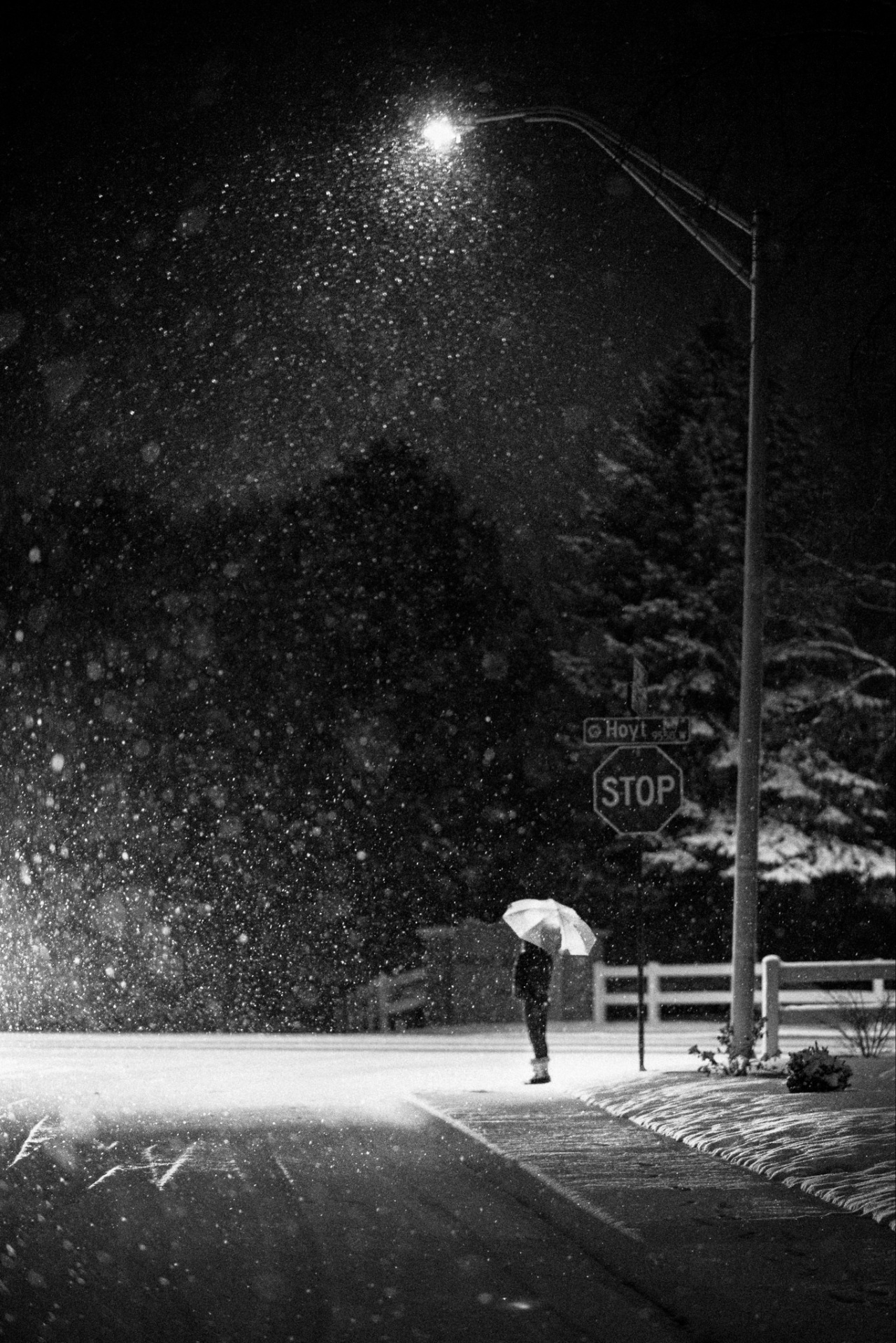
“One does not become enlightened by imagining figures of light, but rather by making the darkness conscious.” Carl Jung
We are living in a turbulent time of political division, economic uncertainty, rising costs, concerns about healthcare and education, climate anxiety, global conflict, and a growing sense that many of the systems we once trusted are no longer predictable.
There is a lot to feel.
And at the same time, we are being offered an extraordinary number of ways not to feel it.
We live in a culture increasingly devoted to feeling better. We meditate. We regulate our nervous systems. We practice gratitude. We reframe our thoughts. We seek positive thinking, mindfulness, self-care, and spiritual practices to help us feel calmer, happier, and more at peace. Sometimes, we simply deny and avoid the feelings.
None of these things are inherently wrong. Many can be deeply helpful.
What if, in our understandable desire to feel better, we sometimes move too quickly away from the very discomfort that has something important to tell us? Discomfort is not a pathology. Sometimes discomfort is an appropriate response to reality. And it can give us an indication that something is off, like a warning light on the dashboard of our car telling us to check under the hood.
For more than 45 years as a therapist, mother, educator, and author, I have watched people struggle with patterns they consciously want to change but unconsciously continue to repeat. They know what they should do. They may have read the books, learned the strategies, and become highly skilled at regulating their emotions. Still, the same discomfort keeps happening.
Most of us were never explicitly taught how to be with difficult emotions. Instead, we were taught how to stop having them. In the earliest years of life, before we have the conscious awareness to evaluate our experiences or consider other options, we absorb messages about who we need to be to belong, what emotions are acceptable, what makes us worthy, and what is safe to express.
Many of us were told things such as: Stop crying before I give you something to cry about. Don’t be angry. Don’t be so sensitive. You’re fine. Get over it. Even if these messages were offered by people who love us and genuinely believe they are helping, children hear something very different. What they hear is: My feelings are too much. My anger isn’t safe. My sadness makes people uncomfortable. My needs threaten connection.
Over time, we adapt. We learn to suppress, avoid, intellectualize, perform, please, control, distract, or otherwise move away from uncomfortable internal experiences. Eventually, the adaptations that once helped us belong can become so familiar that we mistake them for who we are. I’ve always been a perfectionist. I’m just fiercely independent. I don’t need much. I’m not an angry person. What once protected us can eventually limit us.
When certain feelings or qualities repeatedly meet disapproval, shame, rejection, or disconnection, we attempt to push them out of our conscious identity. They then end up living in what psychologist Carl Jung called the shadow. The shadow is where we hide, repress, or deny these parts for fear that they are bad or unacceptable. The shadow continually influences us outside of our conscious awareness– in our reactions, relationships, triggers, judgments of other people, and the patterns we seem unable to break.
Perhaps the parts of ourselves we most want to get rid of are carrying the very thing we need to become whole. The angry part may be carrying a boundary. The needy part may be carrying a legitimate need for connection. The vulnerable part may be carrying our capacity for intimacy. The ambitious part may be carrying a forgotten dream. The envious part may be pointing toward something we deeply desire.
There is an old idea often associated with Jung –what we resist persists and often grows stronger. The more urgently we try not to feel something, the more energy we may spend keeping it away—and sometimes, the more persistent the discomfort becomes.
We can become anxious about being anxious, ashamed of being angry, or frustrated that we are still grieving. Then we are dealing not only with the original feeling, but with our resistance to having the feeling at all.
One of the things I often say to my clients is –All feelings are okay. All behavior isn’t. Becoming curious and more aware of our internal experiences without impulsively acting on them is a new concept for many of us.
Anger can be information without becoming aggression. Fear can be information without making every decision for us. Shame can be felt without becoming our identity. Grief can be experienced without needing to be immediately fixed.
Grief offers one of the clearest examples of how we may misunderstand discomfort. Author Martin Prechtel, in his book The Smell of Rain on Dust, describes grief as praise—a way of honoring what we have loved and what has mattered to us.
What if grief isn’t simply an emotion we are supposed to get over? What if, sometimes, our grief is evidence of our capacity to love? The tears aren’t necessarily the problem. The tears may be the praise.
Instead of asking– How do I stop feeling this?
Instead, we might ask– What does this feeling reveal about what matters to me?
We can then begin to ask—
Is this feeling telling me that I am unsafe?
Is it telling me that a boundary has been crossed?
Is it asking me to grieve something I have lost?
Is it pointing toward a truth I have been avoiding?
Or is it the discomfort of becoming something new?
When we can tolerate enough discomfort to become curious about it, we may begin to discover what lies underneath our frequent struggles.
Across centuries, mystics and contemplatives have deliberately entered silence, solitude, darkness, and uncertainty—not because suffering was inherently good, but because turning inward could reveal something that could not be found through constant distraction.
Psychiatrist Viktor Frankl, writing from his experience in Nazi concentration camps, described the human capacity to find meaning even in circumstances of profound suffering. Frankl’s work is not an argument that suffering is good. It is a reminder that meaning is not dependent upon comfort.
Once something that has been operating outside awareness becomes conscious, we have something we did not have before–choice. Understanding where a pattern came from is not the same as blaming someone for it. We can have compassion for the people who gave us our roots while still choosing which parts of their emotional inheritance we want to carry into the future.
Healing, therefore, is not simply about looking backward and understanding where our patterns came from. It is also about deciding what we want to carry forward. We can have compassion for the adaptations that helped us survive without continuing to let those adaptations run our lives. We can reclaim parts of ourselves without allowing them to take over.
This is what integration looks like. It doesn’t mean acting on every feeling. It means bringing what has been unconscious into conscious relationship with who we are now. We don’t just inherit genes and family stories. We inherit ways of relating to our emotions, our bodies, our needs, relationships, and ourselves. We then unconsciously pass those ways of relating forward—until we make the unconscious conscious and choose to change what no longer serves us.
Drawing from developmental science, attachment theory, shame research, neuroscience, depth psychology, contemplative traditions, and more than four decades of clinical work, I want to invite you to reconsider our relationship with discomfort. Not to seek suffering. Not to stay stuck in pain. Not to abandon regulation or emotional safety. But to develop the discernment to know when discomfort is asking us to protect ourselves, act, grieve, accept, or look more deeply within.
We have become so focused on eliminating uncomfortable internal experiences that we may fail to discover what those experiences are trying to tell us—and in doing so, we may remain unconscious of the very parts of ourselves that could make us more whole.
Sometimes the path to becoming more whole begins when we stop trying to eliminate the parts of ourselves that make us uncomfortable. The gift is not the pain itself. The gift is what becomes possible when we become courageous enough to meet ourselves there.
Emotional maturity isn’t the absence of discomfort. It is the capacity to stay curious about discomfort without being controlled by it. The greatest gift of discomfort is not that it makes us stronger. It is that it makes us more conscious—and more fully who we are, both shadow and light. From there we can begin to live a wholehearted life, embracing all the parts of us, including the ones that may seem dark and mysterious.